90-Ball, 75-Ball and 80-Ball Bingo: The Formats Compared
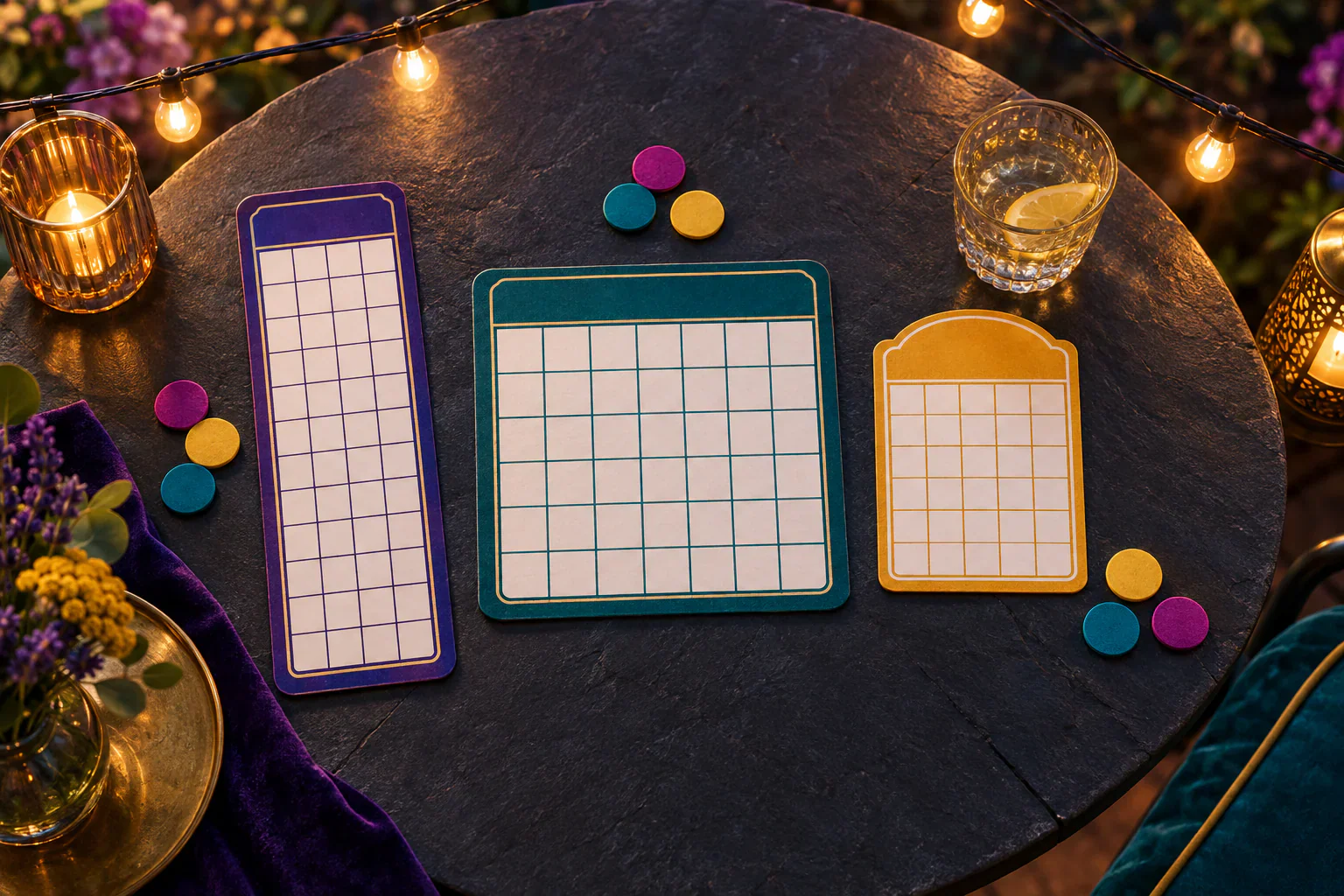
The main difference is the ticket: a standard 90-ball ticket has three rows and nine columns, a common 75-ball card has a five-by-five grid, and an 80-ball ticket has a four-by-four grid. Their winning arrangements differ too, so check the rules of the particular game as well as its format.
Comparing the formats, step by step
A new bingo room can feel much easier to follow once you know what you are looking at. Start with the ticket, then look for the arrangement the game is asking you to complete. Here is how the three formats compare.
90-ball: lines and a full house
A standard 90-ball ticket has three rows, nine columns and 15 numbers. Because there are more spaces than numbers, some of the spaces are blank. Its wide, rectangular shape makes it easy to distinguish from the square cards used in the other two formats.
Prizes are typically awarded for one line, two lines and a full house. Those are separate stages to look out for as the game progresses. The room’s information will tell you what applies to the game in front of you.
If you are used to reading a ticket row by row, this layout gives you a straightforward place to begin. The blanks are simply part of the ticket; the numbered spaces are the ones you need to follow.
75-ball: a square card with patterns
A common 75-ball card has five rows and five columns. It contains 24 numbers and one empty space. Winning objectives can include patterns, so it is worth looking at the positions the game asks you to complete rather than assuming it follows the same stages as a 90-ball room.
There is variation within 75-ball itself. One version described by tombola uses patterns, while another uses a five-line approach and a card with 25 numbers. Both use a five-by-five grid, but they do not have the same rules.
That distinction is handy when you are choosing between rooms: the format name is a useful starting point, while the individual game description supplies the detail.
80-ball: a smaller square
An 80-ball ticket has four rows and four columns, with 16 numbers. Its square layout is smaller than the five-by-five 75-ball card, and every space on the ticket contains a number.
Winning objectives can include lines, patterns or a full house. Before the game starts, take a moment to see which arrangement is in use. The ticket shows where the numbers sit; the objective tells you what you are looking to complete.
Following a game online
The ticket is not the only thing to check when moving into an online room. Find the game information and take a look at how numbers are marked, too. Buzz Bingo says its online system automatically marks matching numbers, which means players using that system do not have to mark them themselves. Do not assume every room works in exactly the same way; check its instructions.
Whether you are looking at an online room or thinking about bingo more broadly, the Gambling Commission identifies equal chance, participation and a clearly defined endpoint as fundamental principles of bingo. The format and presentation may differ, but those principles help explain what sits at the heart of the game.

A closer look: Fluffy Favourites Bingo
Mecca describes its Fluffy Favourites Bingo room as a 90-ball online game based on the Fluffy Favourites slot. It offers prizes for one line, two lines and a full house, giving players the familiar stages described above in a themed setting.
The room also has scheduled bonus rounds and a progressive community jackpot. A full-house winner may enter a bonus round when one is scheduled; winning the full house does not mean a bonus round is always available.
For a more detailed look at the room, read our Fluffy Favourites bingo guide. The shared theme is useful for recognising the room, but its own game information is the place to check the current details before joining.
What to check before or while playing
- Ticket layout: Look at the number of rows, columns and numbered spaces so you can recognise the format on screen.
- Winning objective: Check whether the game is looking for lines, a pattern or another stated arrangement, and which prize stages apply.
- Marking and room instructions: Find out whether matching numbers are marked automatically and how the particular room presents its game.
- Bonus conditions: If a room lists an extra round, read when it is scheduled and who can enter it.
- Your own limits: Decide what you are comfortable spending and stop when you reach that limit.
If you hear a call and wonder what it means, Mecca lists “Two little ducks” as the classic call for 22. Calls can add a bit of character, but the number is the useful part to follow on your ticket.
Related reads
Explore more bingo guides for help with rooms and formats, or browse Bingo & Slot Words when a term needs a little unpacking. For a wider perspective on keeping games enjoyable, visit Playing for Fun.
More in Bingo · Report a correction
Related reading

Bingo Clubs in the UK: How a Night at the Bingo Works Today
From joining a club to following the calls and making a claim, here is what to expect from a bingo session.

Online Bingo Rooms Explained: Tickets, Auto-Daub and Room Jackpots
Follow an online bingo game from the lobby to the result, including ticket formats, automatic marking and a Fluffy Favourites jackpot example.
Fluffy Favourites Bingo: How the Themed 90-Ball Room Plays
Get to know the ticket, prize stages and themed extras described for Fluffy Favourites bingo rooms.